
Article: Demystifying Skincare Ingredients: How to Read the label (Without a Chemistry Degree)
Demystifying Skincare Ingredients: How to Read the label (Without a Chemistry Degree)
The front of the bottle is written by a marketing team. The back is written by law. Here's how to read the one that tells the truth.
Most of us buy skincare from the front of the pack. The claim, the photograph, the ingredient the brand has chosen to shout about. Fair enough, the back is a wall of Latin, printed in six-point type, usually on a curved surface in a shop with bad lighting.
But the back is the only part of a skincare product that is legally required to be honest. In the UK and EU, every cosmetic carries an INCI list, the International Nomenclature of Cosmetic Ingredients, and that list follows rules. Once you know them, a label stops being a wall of Latin and becomes something more useful: a recipe.
Here's how we read one. It takes about thirty seconds.
1. The order is the recipe, so start at the top
Ingredients are listed in descending order of concentration, most to least, down to the ones making up 1% of the formula.
This rule does most of the work. The first five ingredients are usually 70–80% of what's in the jar. If you read five words on a label, read those. That's what you're actually buying.
And it's where the biggest decision any brand makes is visible. Water is the first ingredient in most moisturisers. This isn't inherently a problem, water is a solvent, it carries things, skin needs hydration. But it's also the cheapest thing you can put in a jar, and it's typically 60–80% of the formula.
So when you see aqua first, the question isn't whether water is bad. It's: what else could have gone there?
Turn over our Glow Me and the first thing you'll read is Rosa Damascena Flower Water, rose hydrosol, distilled from the petals themselves, arriving with its own soothing compounds. Not water with a little rose in it. Rose water as the base.
2. Check the meaning of the Latin names and the label opens up
Ingredient lists use botanical names, not marketing names. Precise, and consistent across every country, which does mean the front and back of a pack can look like they're describing different products.
A starting vocabulary:
| On the back | What it actually is |
|---|---|
| Rosa Damascena Flower Water | Rose hydrosol |
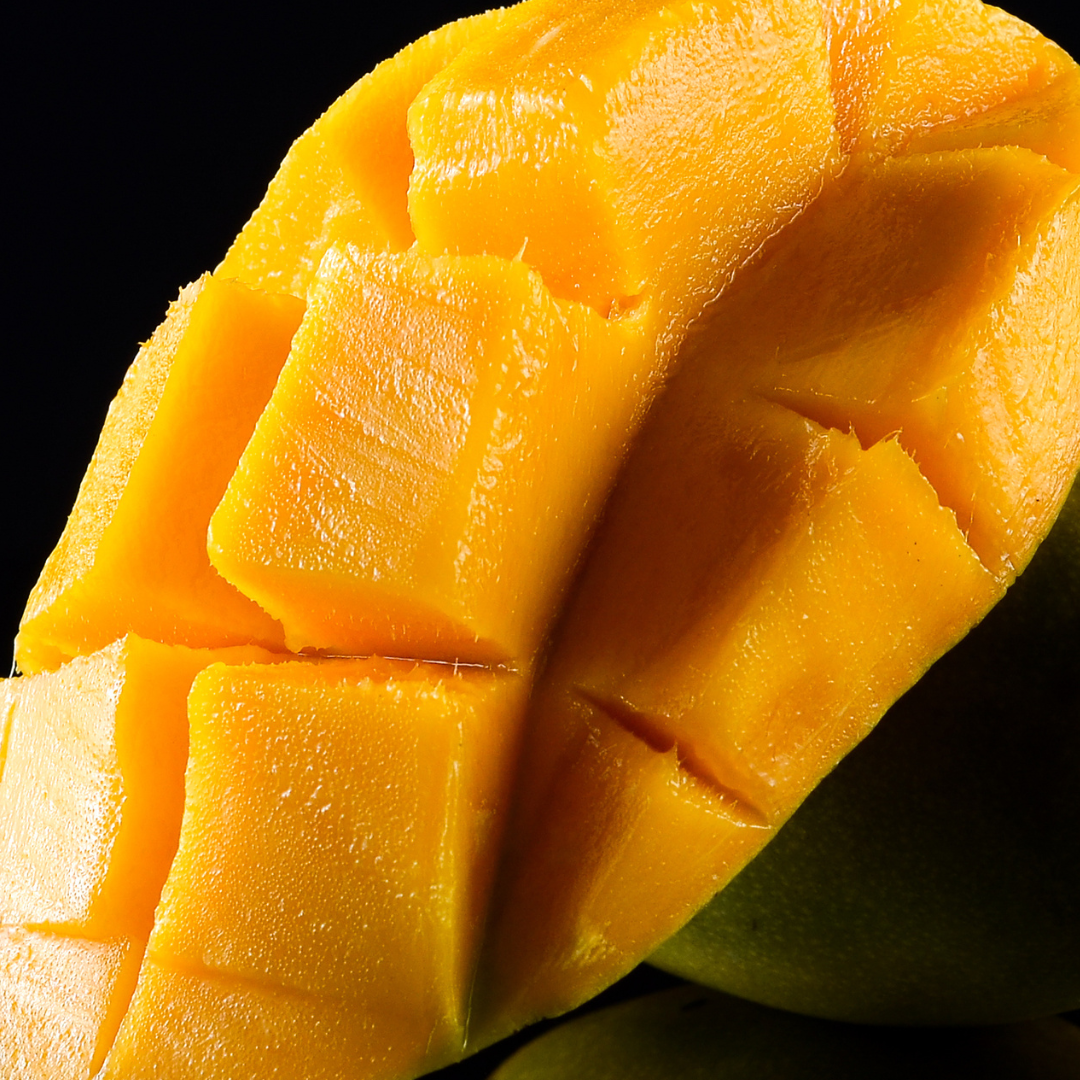
| Mangifera Indica Seed Butter | Mango butter |
| Punica Granatum Seed Oil | Pomegranate seed oil |
| Crocus Sativus Flower Extract | Saffron |
| Dipotassium Glycyrrhizate | Liquorice |
| Pelargonium Graveolens | Geranium |
| Niacinamide | Vitamin B3 |
| Tocopherol | Vitamin E |
Every one of those is on the back of our Glow Me, in that order of appearance. Nothing on this list is chemical jargon once you know how to read it.
And the rule that matters: if the front of the pack names an ingredient, the back must list it. If you can't find it, it isn't in there in any meaningful sense. "Inspired by", "with the essence of" and "-infused" are not ingredients.
3. Parfum is one word hiding many
Fragrance is where the rules go soft. A brand can declare a blend of dozens of aromatic compounds under the single word parfum, and is not required to name any of them. For most people that's a non-issue. For anyone with sensitive, reactive or eczema-prone skin, it's the first thing worth ruling out, synthetic fragrance is among the most common causes of contact irritation in cosmetics.
You'll also see a tail of names at the very end of some lists: limonene, linalool, citral, geraniol, citronellol. These are declared allergens, and they're widely misread as additives. They aren't. They occur naturally in essential oils, and the law requires them to be named above a certain threshold regardless of how they got there, which is why a plant-scented product often lists more of them than a synthetically fragranced one.
So when you spot those names at the end, go back and read the rest of the list. Somewhere in it should be the essential oil they came from, geranium, lavender, rose. Find it, and you know exactly what's scenting the product. If the only fragrance ingredient listed is parfum, you never will.
So the question isn't whether those names appear. It's whether you can see where they came from. A label naming its essential oils and then declaring the compounds within them has told you the whole story. A label that says parfum and stops there has told you nothing.
4. Read the small print under the claim
Percentage claims are where careful wording lives. "97% organic" and "97% of total ingredients are of natural origin" are very different statements sitting in the same size type.
Look for the asterisk. It usually leads to a footnote telling you which ingredients the claim covers, and sometimes what's been excluded from the calculation. Brands proud of their numbers make that footnote easy to find.
While you're there, check the little open-jar symbol with a number in it: 6M, 12M, 24M. That's the Period After Opening: how long the product is good for once the seal is broken. Products with fewer or gentler preservatives often carry a shorter PAO. Not a flaw; a consequence.
The thirty-second version
Next time you're holding a jar:
- Read the first five ingredients that's roughly 75% of the product
- Ask what the brand chose to put at the top, and what it could have put there instead
- Cross-check the front-of-pack claim against the back; if it's named on the front, it must be listed
- See whether the fragrance is named, or hidden behind one word
- Check the asterisk footnote and the PAO symbol
That's it. No chemistry degree required.
Why we're happy for you to do this to us
Mum spent years formulating and perfecting each formulation before we sold a single jar, and one rule never changed: every ingredient has to earn its place, at the amount that actually works. No more, and no less.
So start at the top of our list. Where most moisturisers lead with water, ours leads with rose hydrosol. That was the most expensive decision in the entire formula and it's the one we'd defend hardest.
Read on down our ingredients list for Glow Me and it's mango butter rather than shea, chosen deliberately for the skin it was made for. Pomegranate seed oil for antioxidants. Niacinamide, ninth on the list and well above every preservative; a real dose of a real active, doing the work on tone and barrier it's genuinely evidenced for. Liquorice for pigmentation.
We publish our full ingredient lists on every product page for the same reason we're publishing this. If you can read a label properly, we don't need to convince you of anything.
Turn ours over. Then turn over the one currently on your bathroom shelf.


Leave a comment
This site is protected by hCaptcha and the hCaptcha Privacy Policy and Terms of Service apply.